Showing posts with label brains. Show all posts

8/25/11

Wait… what did you just say? I didn't, uh, hear you, I, uh, guess


"Once these population differences were corrected for, the long-term effects of marijuana use disappeared: The scientists found that “there were no significant between group differences.” In other words, the amount of pot consumed had no measurable impact on cognitive performance. The sole exception was performance on a test of short-term verbal memory, in which “current heavy users” performed slightly worse than former users. The researchers conclude that, contrary to earlier findings, the mind altering properties of marijuana are ephemeral and fleeting…" | via FC |


Unrelated: I'm getting smarter every day. 

11/18/10

Long term deleterious effects

"We have to be clear about getting the message out that marijuana isn't really a benign substance," she said. "It has a direct effect on executive function. The earlier you begin using it, and the more you use of it, the more significant that effect."
The study included 33 chronic marijuana smokers and 26 control subjects who did not smoke marijuana. They were given a battery of neurocognitive tests assessing executive function, including the Wisconsin Card Sorting Test, which involves sorting different cards based on a set of rules given. During the test, the rules are changed without warning and subjects must adjust their responses to the new rules.
The findings showed habitual marijuana users made repeated errors even when told that they were wrong. Users also had more trouble maintaining a set of rules, suggesting an inability to maintain focus. Early onset users and those who used the most marijuana had the most trouble with the test, making more than twice as many errors and fewer correct responses than later onset smokers."

6/18/09

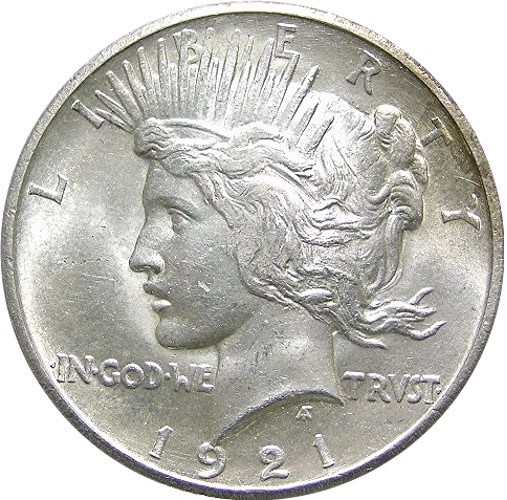
Heads. Heads. Heads. Heads. Heads.


I think such explanations are especially popular in times of rampant uncertainty, which is where we are now. After all, if we understand the movement of the financial markets then we have a modicum of control - we know when to buy and sell - and people love control. In one classic 1975 study led by Ellen Langer, male undergrads at Yale were asked to predict the results of coin tosses, a cliched example of a random event. Nevertheless, a significant number of the men believed that their performance improved through practice - they got better at calling heads or tails - and that distraction would detract from their performance. How did they justify this wishful thinking? As Langer notes, the men engaged in some sly cognitive filtering and consistently "overremembered past successes".

Is Wall Street any different? The market, after all, is a classic example of a "random walk," since the past movement of any particular stock cannot be used to predict its future movement. Given this inherent stochasticity, it's silly to attempt to explain the daily movement of the market: such an endeavor is like analyzing a series of flipped coins, or trying to explain the payout patterns of a slot machine. We can construct theories - and some of these theories might even sound intelligent - but they're ultimately futile attempts to stave off the flux.

What's even more disturbing is that such errant explanations might actually cost us money, since they lead, inevitably, to over-confidence. (Those Yale undergrads vastly overestimated their ability to predict coin flips.) We become so convinced that the logical-sounding explanations are true that we forget we're dealing with a random, inherently unpredictable system. The end result is too much trading.

The Frontal Cortex

4/15/09

Putting the bullet back in the "Brain Research Bulletin"

From the NZH:
Personality types are linked with structural differences in the brain - which could explain why one child grows up to be impulsive and outgoing while another becomes diligent and introspective.

If the findings are confirmed by other scientists, they suggest that children are not only born with a given personality type, but they develop anatomically different brains as a result of being that sort of person. It raises the prospect of being able to test a young child's future personality by viewing the anatomy of their brain with a hospital scanner.

"If you are looking at volume, you are quantifying the tissue that is there. What we found was not just speculative. There is quite a bit of difference between people with different personality traits," said Professor Venneri.
The study is to be published in the journal Brain Research Bulletin.

Of course, within the constraints of their hard-coded personalities, people clearly exercise free will.

4/9/09

This video creeps me out


But the good news is that means I'm not (very) schizophrenic.

11/17/08

The horrible truth

... is that I need to spend less time playing games, and more time doing my freakin' work of choice:
The curious thing about Ericsson's study is that he and his colleagues couldn't find any "naturals" - musicians who could float effortlessly to the top while practising a fraction of the time that their peers did. Nor could they find "grinds", people who worked harder than everyone else and yet just didn't have what it takes to break into the top ranks. Their research suggested that once you have enough ability to get into a top music school, the thing that distinguishes one performer from another is how hard he or she works. That's it. What's more, the people at the very top don't just work much harder than everyone else. They work much, much harder.

This idea - that excellence at a complex task requires a critical, minimum level of practice - surfaces again and again in studies of expertise. In fact, researchers have settled on what they believe is a magic number for true expertise: 10,000 hours.

"In study after study, of composers, basketball players, fiction writers [!], ice-skaters, concert pianists, chess players, master criminals [!!!]" writes the neurologist Daniel Levitin, "this number comes up again and again. Ten thousand hours is equivalent to roughly three hours a day, or 20 hours a week, of practice over 10 years... No one has yet found a case in which true world-class expertise was accomplished in less time. It seems that it takes the brain this long to assimilate all that it needs to know to achieve true mastery." | The Guardian, via Daring Fireball |

Related: How does one accumulate 10,000 hours of being a master criminal?
eXTReMe Tracker