11/29/10

"Obama Administration Weights Indefinite Detention"

In part, because Ahmed Ghailani was "almost aquitted" (he wasn't). 
"The jury came within one count of acquitting him entirely," says Benjamin Wittes, a senior fellow at the Brookings Institution. "And had that happened that would have put the government in an enormously difficult position because if you hold a trial and somebody is acquitted, it kind of violates our sense of what a trial is to say, well, we're going to hold him anyway."
Hmm, seems like there's something else that violates our sense of what a trial is. 

11/22/10

Let's take a moment to talk about videogames

For you who care not for our national art, come back after Thanksgiving for less dorky postings. Meanwhile, those of you who know of which I speak, skip past the jump and join me.

11/18/10

Well I hope Neil Young will remember

...a recharging LincVolt car don't need leavin' unattended, anyhow.

"...LincVolt suffered a disastrous accidental fire stemming from human error. The car was plugged in to charge and left unattended. The wall charging system was not completely tested and had never been left unattended. A mistake was made. It was not the fault of the car."

Long term deleterious effects

"We have to be clear about getting the message out that marijuana isn't really a benign substance," she said. "It has a direct effect on executive function. The earlier you begin using it, and the more you use of it, the more significant that effect."
The study included 33 chronic marijuana smokers and 26 control subjects who did not smoke marijuana. They were given a battery of neurocognitive tests assessing executive function, including the Wisconsin Card Sorting Test, which involves sorting different cards based on a set of rules given. During the test, the rules are changed without warning and subjects must adjust their responses to the new rules.
The findings showed habitual marijuana users made repeated errors even when told that they were wrong. Users also had more trouble maintaining a set of rules, suggesting an inability to maintain focus. Early onset users and those who used the most marijuana had the most trouble with the test, making more than twice as many errors and fewer correct responses than later onset smokers."

11/10/10

Noted for future reference

"... exclusive access to 311 data gives incumbent politicians -- like, say, Michael Bloomberg -- a distinct advantage when it comes to getting reelected. For instance, when campaigning on a neighborhood level, the incumbent can look at the 311 data for each neighborhood and tailor their message appropriately, e.g. promising to help combat noise in a neighborhood with lots of noise complaints or fix the streets in a neighborhood with lots of calls about potholes."


via

11/5/10

11/3/10

The 2010 Congress Must Pass a Second, Sweeping Stimulus Package During Its Lame-Duck Session

One might say it's political suicide for the Democratic Party. But consider:

  • There is no chance that the GOP-controlled house will authorize stimulus dollars next year.
  • Without more stimulus, we will face close to 10 percent unemployment in November, 2012. 
  • With 10 percent unemployment, Obama will lose in 2012 and we will all wake up to this man as president.


I am not kidding. Rick Perry is like a Sarah Palin who can talk to you about what magazines he reads. He's really, really dangerous. 

So, Congressional Democrats, what's it going to be?

11/2/10

One more reason to hate baseball

So, the SF Giants win a "World" Series. I don't know what the big deal is about the championship of a dying and irrelevant sport.

What I do know is that the partying that ensued in San Francisco may leave so many hung over today that the kids don't get out and vote for Prop 19.

11/1/10

Catchy

via Mankiw

10/29/10

FAA gives first-ever approval for a flying car

By day, the I-Tec Maverick is a canvas covered car that does 0-60 in under 4 seconds.


Also by day, the Maverick flies!


The I-Tec Maverick, which is a roadworthy dune buggy powered by a Subaru engine, has finally been granted the first certification from the Federal Aviation Administration for a flying car. Developed by the Indigenous People’s technology and Education center, The I-Tec Maverick is certified as a “powered parachute,” which comes with a 170-hp, 2.4 liter Subaru four-cylinder built into a canvas-covered frame. The Maverick can do up to 60mph in under 4 seconds, and can take off within 100 yards. The car priced at $80,000 deploys a cloth wing on a 22-foot mast and takes flight.


via

10/26/10

To serve and protect

"On Saturday, the Pittsburgh Tribune-Review reported that a man had called the police to report that he'd been sold bad marijuana. "It was nasty," he said. (But probably not as nasty as the revelation that he was being charged with a crime). This dude's cluelessness could translate into brilliance in California. If the cops are worried about losing their jobs eradicating marijuana, why not just change the job description and have them eradicate criminally awful schwag? Now that would really put the Mexican cartels out of business."


source for text and img

10/15/10

Meanwhile, there have been reports of cabbage rustling

I'm a fan of kimchi, and would like to see more variety of it available in the States. Most of the kimchi I've had has been pretty much of the same variety. Anyone in the area have any suggestions?

I have to agree with Troisgros here:
For most Westerners, however, kimchi remains an unacquired taste. It can offend not only with its taste but also with its odor, which can linger on a person for hours. And for those unused to its fire and fury, even a small dish of kimchi can appear less as a delicacy than as a kind of incendiary device.

“To a Western palate, with all the other options out there, kimchi won’t rank very high,” Mr. Chinn said.

A gathering was held in Seoul last week to promote Korean food, with European master chefs coming in for panels and demonstrations. Michel Troisgros, the renowned French chef from Roanne, listened to a Korean official hold forth on the wonders of fermentation and an ambitious project to export Korean foods like kimchi.

“I think you have to stop talking about fermentation,” Mr. Troisgros told the man. “It’s not sexy.”

10/11/10

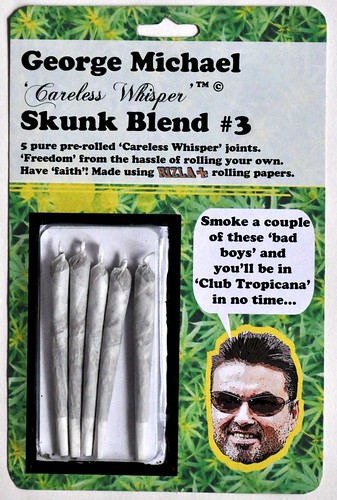
If you think this is going to happen, you are probably high right now

Ex-heads (not to be confused with X-heads) of the DEA take to the WSJ to explain that California can't just go and legalize the weed. Scott Morgan of stopthedrugwar.org responds. I've highlighted the crux of Mr. Morgan's argument in red, and I've hilighted the marijuana-incded wishful thinking in leafy green.


For another layer of absurdity, consider that one of the authors, Karen Tandy, presided over the DEA during a dramatic expansion of the medical marijuana industry that she now claims is legally impossible, even though it actually happened in real life while she was in charge of federal drug enforcement. She knows as well as anyone that California can make its own drug laws whether the DEA likes it or not. It's true that she could have prosecuted everyone in sight under federal law, but for a variety of practical and political reasons, that isn't what happened. It's not likely to happen if Prop 19 passes either, at least not unless Obama has a masochistic desire to further alienate his base as we heads towards 2012.
Morgan's absolutely right that the law is one thing, and politics is very much another. And he's right that the success, to date, of medical marijuana has definitely been one of pragmatism and politics trumping the letter of the law.

But let's take a step back and and stop projecting our pothead wish fulfilment onto our President. B-Rock's got things he's trying to accomplish, and greening up the west coast is probably not at the top of his list.

If Prop 19 passes, Obama is going to have three choices.

1. Come down on California like a stern parent, and explain that this is not a choice they get to make until they move out and go to college. 

Morgan's right, that's going to disillusion a lot of people. But half of them were going to forget to vote.

2. Hold up California as an example of the way forward, and instruct his Justice Department to disregard relevant federal law in California, and maybe on the whole Pacific coast. 
Can you imagine? While some of us would be celebrating a move towards sanity, Republicans would be popping champaign corks as well as they began drawing up strategy for the ultimate 2012 wedge issue. It could cost Obama his second term.

3. Try to ignore it, hoping it will go away. 
Same result as #2, just slower to take shape.

What do you think, stoners?

img credit

10/7/10

0.05-0.07

Texas State Senate Criminal Justice Committee Chairman John Whitmire (D - Houston) thinks there might be a problem:
“Some people shouldn’t be driving after one drink — probably below the 0.08 limit — and this could address that. It might also free up courts and prosecutors to focus on the repeat offenders.”
Austin Police Chief Art Acevedo agrees:
He noted that one person may drive dangerously at the 0.08 level — the nationally accepted standard for being drunk — while others “may be at 0.05 or 0.06. It depends on the person.”

“People sometimes focus on how many drinks they can have before they’ll go to jail,” Acevedo said. “It varies. ... A person may be intoxicated at 0.05, and you don’t want them out driving.”
 Acevedo testified before Whitmire's committee on the subject and supported 'mandatory blood samples for repeat offenders, allowing police to operate DWI checkpoints, and adding a new offense of aggravated DWI for offenders who are found to have a breath-alcohol reading of 0.18 or higher.'

I have two problems with all of this.  For one thing the presumption that a person exists who is too intoxicated to safely operate a motor vehicle at a blood alcohol level between 0.05 and 0.07 also implies that a person exists who is not too intoxicated to safely operate a motor vehicle at a blood alcohol level above 0.08.  If one is possible the other is equally possible.  If human physiology is variable it must be variable in both directions.

But my real gripe here is with Acevedo, or any other active police official for that matter, making policy suggestions above the level of police department administration.  Police officers are hired to enforce laws.  Police chiefs are hired to manage departments of police officers.  Politicians are elected to make laws.  There's a distinct and important difference there.  The People don't elect police officers at any level.  The People hire police officers to enforce the laws made by the elected politicians. 

Members of the US military are forbidden by law from participating in most politics beyond voting.  This includes publicly advocating for or against particular issues, especially in uniform.  There are many reasons that this is a good idea, not least of which is that it is desirable to have a stark separation between elected civilian government, accountable to the The People, and military chain of command, ultimately accountable to the the elected civilian government.  We don't want generals deciding who we attack, we want elected officials who must stand for re-election to make those decisions so we can fire them when they fuck it up.

Similarly we shouldn't ask police officers who should get arrested or why.  We should tell them who to arrest and then give them the support they need to do so safely and efficiently.

Source
eXTReMe Tracker