7/27/12
Dumb Video Games: Pandemic Edition
The game Pandemic II challenges you to destroy the world. Are you up to the challenge or will you let a bunch of monkeys in lab coats defeat you?


7/25/12
CEOs write (poor) letters
 |
| Enjoy your flight! |
… lower taxation of his industry!
There's no mention of the reason those taxes exist, so we must assume for ourselves that he does not believe we need to hire 2500 air traffic controllers.
But really, I came today to post a snarky proofread of his otherwise insipid letter:

I don't think he understands what "revenue" means. It usually starts with a single penny, no?

7/20/12
Blogging!
Nobody's been using this space in a while… I've even let the banner image hosting lapse. But I'm about to get it rolling again, even if only for two weeks.
5/10/12

3/21/12
Killing space
"social media eventually fosters a sense of self-loathing… unless you’re stupid, in which case you’re as happy as a pig in shit"
via
via
2/23/12
Privacy in a world bereft of privacy, part 6: Good manners
This is really smart. After pointing out that targeted advertising is not the main problem with privacy (a point we've tried to make on this blog before), the author states:
I have a kind of utopian view that new social norms will inevitably evolve to cover these new capabilities, but even in the utopian view, this kind of change only occurs in response to very visible disasters, and will take a long time. We've covered this before.
So lets take a look at one of the more concrete concerns that's happening right now: If you are looking for a new job, your potential employer is almost certain to google (or bing or siri) you. If the top result is a picture of you doing a keg stand while wearing a 10-inch pink strap on, you will probably not get the job. (Or, just maybe, you will get your dream job.)
As an employer I have a strong incentive to, as the author would have it, peek through the open window of my potential employee. And I have almost zero blowback for doing so. And until this leads to widespread social unease, that's going to remain true.
So I agree 100 percent with the author's take, but I think it's also very important to be discussing the steps we should take to protect ourselves, and our children, right now, while we wait for society to adjust.
On the other hand, it does seem to me that there is a serious problem about online privacy, and one that is only ever discussed tangentially. The problem that I’m thinking about arises out of the fact that the web is a social space, and yet because of the implicit threat of punishment, one is all but forced to show a false face in this part of one’s social life.
To the extent this issue is discussed at all, the presumption is that those who are punished deserved that punishment, either because their honesty showed them to be a bad person or because their honesty showed them to lack prudence. Which is to say we see a lot of discussion about what you can or should do to protect your reputation online, and no discussion at all of the norms behind our expectations.
I have a kind of utopian view that new social norms will inevitably evolve to cover these new capabilities, but even in the utopian view, this kind of change only occurs in response to very visible disasters, and will take a long time. We've covered this before.
So lets take a look at one of the more concrete concerns that's happening right now: If you are looking for a new job, your potential employer is almost certain to google (or bing or siri) you. If the top result is a picture of you doing a keg stand while wearing a 10-inch pink strap on, you will probably not get the job. (Or, just maybe, you will get your dream job.)
As an employer I have a strong incentive to, as the author would have it, peek through the open window of my potential employee. And I have almost zero blowback for doing so. And until this leads to widespread social unease, that's going to remain true.
So I agree 100 percent with the author's take, but I think it's also very important to be discussing the steps we should take to protect ourselves, and our children, right now, while we wait for society to adjust.
2/22/12
Google makes the World a Cyber Place
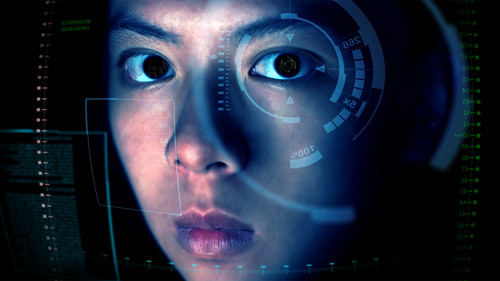
Google apparently is well en route to marketing augmented reality glasses.
[Google's augmented reality] glasses will have a low-resolution built-in camera that will be able to monitor the world in real time and overlay information about locations, surrounding buildings and friends who might be nearby, according to the Google employees. The glasses are not designed to be worn constantly — although Google expects some of the nerdiest users will wear them a lot — but will be more like smartphones, used when needed. Internally, the Google X team has been actively discussing the privacy implications of the glasses and the company wants to ensure that people know if they are being recorded by someone wearing a pair of glasses with a built-in camera. |Google to Sell Heads-Up Display Glasses by Year’s End - New York Times|Fast Company suspects Google will eventually try to monetize this technology... but that strikes me as a small price to pay for Google making augmented reality a reality.

2/7/12
Heads Up Display in Contact Lenses
Scientific American has a short discussion of the potential of displaying information in a person's contacts or on eyeglasses.
This gives me goosebumps on my fleshy parts.
Based on the article, I believe this technology is still vaporware, but the potential for displaying pixels wirelessly in contact lenses has been demonstrated sufficiently that DARPA is now playing a funding role in developing this technology.The new system consists of advanced contact lenses working in conjunction with lightweight eyewear.
Normally, the human eye is limited in its ability to focus on objects placed very near it.The contact lenses contain optics that focus images displayed on the eyewear onto the light-sensing retina in the back of the eye, allowing the wearer to see them properly. Conventional mobile device screens are often too small to read comfortably "and certainly too small to enjoy," Willey said.
In contrast, Innovega's contact lenses could effectively generate displays with a screen size "equivalent to a 240-inch television, viewed at a distance of 10 feet."
Moreover, by projecting slightly different pictures to each eye, the display can generate the illusion of 3D. "You get full 3D, full HD, fully panoramic images," Willey said. |SA|
This gives me goosebumps on my fleshy parts.

11/11/11
Comics Friday: God works in mysterious ways edition
Dumb games Friday was too much effort, because we have to play a game for a while to know whether it's worth posting. So instead I'm trying out webcomics.

11/9/11
A great article on "The Social Graph"
If you are at all interested in social networks, I strongly recommend reading this article over at the Pinboard developer blog. I'm just going to toss out some examples here. If any of these sound interesting, go read the whole thing.
First, there's a lot about the technical failures of Facebook and Google+ to get at the "graph" part of the Social Graph.
There's also the matter of things that XFN doesn't allow you to describe. There's no nemesisor rival, since the standards writers wanted to exclude negativity. The gender-dependent second e on fiancé(e) panicked the spec writers, so they left that relationship out. Neither will they allow you to declare an ex-spouse or an ex-colleague.Then there's some great stuff about how anti-social social networks really are:
And then there's the question of how to describe the more complicated relationships that human beings have. Maybe my friend Bill is a little abrasive if he starts drinking, but wonderful with kids - how do I mark that? Dawn and I go out sometimes to kvetch over coffee, but I can't really tell if she and I would stay friends if we didn't work together. I'd like to be better friends with Pat. Alex is my AA sponsor. Just how many kinds of edges are in this thing?
And speaking of booze, how come there's a field for declaring I'm an alcoholic (opensocial.Enum.Drinker.HEAVILY) but no way to tell people I smoke pot? Why are the only genders male and female? Have the people who designed this protocol really never made the twenty mile drive to San Francisco?
You might almost think that the whole scheme had been cooked up by a bunch of hyperintelligent but hopelessly socially naive people, and you would not be wrong. Asking computer nerds to design social software is a little bit like hiring a Mormon bartender. Our industry abounds in people for whom social interaction has always been more of a puzzle to be reverse-engineered than a good time to be had, and the result is these vaguely Martian protocols.
Social networks exist to sell you crap. The icky feeling you get when your friend starts to talk to you about Amway, or when you spot someone passing out business cards at a birthday party, is the entire driving force behind a site like Facebook.
11/8/11
It's easy to rap about Berlusconi, because his name rhymes with a large percentage of the Italian language

He's also a criminal and a joke, and Italy will be well rid of him, maybe soon:
Reporting from Rome— Italy's beleaguered prime minister, Silvio Berlusconi, has survived more than 50 no-confidence votes and multiple accusations of criminal and sexual impropriety, including charges he paid for sex with a 17-year-old girl. But the 75-year-old billionaire may have finally met his match in the bond market.
With dwindling confidence in Berlusconi's ability to manage Italy's affairs — and the Eurozone's debt crisis hanging in the balance — investors Monday pushed up Italian bond yields to a euro-era high of 6.63%. That means higher borrowing costs, and takes the yield ever closer to a point that tipped Greece, Ireland and Portugal over the edge and seeking financial rescue.
… Indeed, the reaction from financial markets adds to "strong pressure for Berlusconi to resign," said Sergio Fabbrini, political science professor at the LUISS Guido Carli university in Rome.
In once sense, this the ultimate referendum on his performance. The bond rates represent the utter failure of the country to right itself.
On the other hand, as much as I would like to see Berlusconi out, there's something unseemly about the bond market* having this much power over a sovereign, democratic country. It reminds me of the rating agencies trying to dictate the size of our own budget cuts during the summer.
Capitalism should be a tool in service of democracy, not the other way around.
---
* The bond market is people, my friend.
11/7/11
It's the (plausibility of) equality, stupid
One assumes it's our old Doctor DR, posting at numskulduggery, who highlighted this quote:
"The problem in a nutshell is this: Inequality in this country has hit a level that has been seen only once in the nation’s history, and unemployment has reached a level that has been seen only once since the Great Depression. And, at the same time, corporate profits are at a record high. In other words, in the never-ending tug-of-war between “labor” and “capital,” there has rarely—if ever—been a time when “capital” was so clearly winning."
I have to think we are reaching a tipping point, here, and that we will tip towards progress. And here's why.
During the formative years of the blogosphere, I spent many, many words here and in comments on other sites making the case that the middle class was losing under trickle-down and deregulatory policies. During this time, I could rarely get our conservative interlocutors to agree to the basic facts.
Now, however, these facts are widely reported and discussed. And conservatives have been forced from being "income inequality deniers" into a far less defensible position that this dramatic inequality is somehow OK. We shouldn't demonize success, after all.
"The problem in a nutshell is this: Inequality in this country has hit a level that has been seen only once in the nation’s history, and unemployment has reached a level that has been seen only once since the Great Depression. And, at the same time, corporate profits are at a record high. In other words, in the never-ending tug-of-war between “labor” and “capital,” there has rarely—if ever—been a time when “capital” was so clearly winning."
I have to think we are reaching a tipping point, here, and that we will tip towards progress. And here's why.
During the formative years of the blogosphere, I spent many, many words here and in comments on other sites making the case that the middle class was losing under trickle-down and deregulatory policies. During this time, I could rarely get our conservative interlocutors to agree to the basic facts.
Now, however, these facts are widely reported and discussed. And conservatives have been forced from being "income inequality deniers" into a far less defensible position that this dramatic inequality is somehow OK. We shouldn't demonize success, after all.
10/26/11
Facebook finds European Privacy Laws more Stringent
An Austrian law student named Max Schrems has filed complaints against Facebook for violation of his privacy rights with the Irish Privacy Commissioner.
He's also set up a website called Europe v. Facebook where you can read his 22 complaints.
According to some news coverage, Facebook could be fined 100,000 Euros (nearly $140,000) for its violations of Irish law.
Could this be the beginning of the end of Facebook as we know it?
10/25/11
I'm sorry, but The Simpsons is still funny

Discuss. They even made a funny World Trade Center joke in this episode.
Archer is still the best animated show on TV.
10/13/11
Thank you, Federal Aviation Administration, for giving us a new euphemism for sex
"Physically jostled."
Subscribe to:
Posts (Atom)