and many many more.


....there is a large body of evidence suggesting that kids aren't exactly a bundle of joy. For instance, recent work has shown that parents with more kids are more likely to suffer from depression, probably because each additional kid increases the stress burden. As the Harvard psychologist Daniel Gilbert notes, "The only known symptom of the empty-nest syndrome is increased smiling. Careful studies of how women feel as they go about their daily activities show that they are less happy when taking care of their children than when eating, exercising, shopping, napping, or watching television." According to the data, looking after the kids is only marginally better than mopping the floor. Most people are happier watching bad TV than spending time with their offspring. |via|


Costner's high-speed centrifuge machine has a Los Angeles-perfect name: "Ocean Therapy."
Placed on a barge, it sucks in large quantities of polluted water, separates out the oil and spits back 97% clean water.
"It's like a big vacuum cleaner," said Costner's business partner, Louisiana trial lawyer John Houghtaling.
"The machines are basically sophisticated centrifuge devices that can handle a huge volume of water," he said.
The "Field of Dreams" star first got a team together to create the device in the wake of the 1989 Exxon Valdez spill in Alaska.
His scientist brother, Dan Costner, helped develop the device, and together, the brothers formed Costner Industries Nevada Corp. to pursue various energy projects, including a non-chemical battery that could last 15 years.
The 55-year-old actor eventually sank $26 million into the Ocean Therapy oil separator project. He obtained a license for the device from the Department of Energy in 1993 and has been trying for years to promote it.
...
British Petroleum - desperate for ideas - gave the okay to test six of Costner's gizmos this week, said BP Chief Operating Officer Doug Suttles.


A couple weeks ago, I suggested that the BP oil spill would actually make climate legislation less likely to pass the Senate, neatly highlighting the perversity of that institution. In the past, disasters often helped spur new legislation, rather than kill it. Yesterday, on "Meet the Press," Chuck Schumer agreed. Schumer said the spill "changed the politics" of the bill--for one thing, its Republican co-sponsor, Lindsay Graham, dropped out--and noted that "it's going to be harder to get one done given that drilling off coast was a part of the compromise."
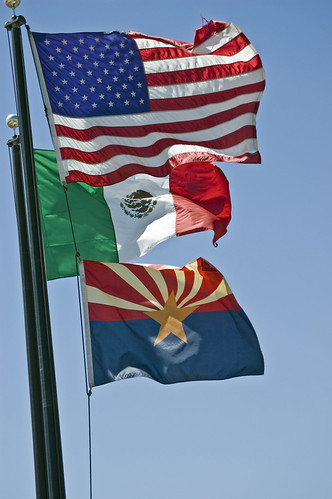
As a protest against Arizona’s controversial immigration law, the chambers of commerce from Nuevo Laredo to Matamoros have agreed to set May 25 as a “Day Without Mexicans” on the South Texas border.
Business leaders are calling on all Mexican nationals to avoid crossing the international bridges into the United States for any reason, but particularly for shopping, on that day.
Amid complaints about high taxes and calls for a smaller government, Americans paid their lowest level of taxes last year sinceHarry Truman's presidency, a USA TODAY analysis of federal data found.
...
Federal, state and local taxes — including income, property, sales and other taxes — consumed 9.2% of all personal income in 2009, the lowest rate since 1950, the Bureau of Economic Analysis reports. That rate is far below the historic average of 12% for the last half-century. The overall tax burden hit bottom in December at 8.8.% of income before rising slightly in the first three months of 2010.
I've been saying forevers and evers that it's time to raise taxes. An increase to the average tax rate of the last 50 years (properly progressive, mind) would go a long way towards righting our economic boat, especially as revenues are likely to bloom along with the recovering economy.
"The idea that taxes are high right now is pretty much nuts," says Michael Ettlinger, head of economic policy at the liberalCenter for American Progress.
Individual tax rates vary widely based on how much a taxpayer earns, where the person lives and other factors. On average, though, the tax rate paid by all Americans — rich and poor, combined — has fallen 26% since the recession began in 2007. That means a $3,400 annual tax savings for a household paying the average national rate and earning the average national household income of $102,000. [Emphasis added.]Emphasis added. So, aside from my work friends (who are all captains of industry, etc., etc.) I know very few people who have a household income of over $100K. This is a case where "average" really, really, does not mean "typical."
According to Bundle's first "How America Spends" report, the top-spending Americans lived in Austin in 2009. Households in the Texas capital averaged $67,076 in overall household expenses (excluding mortgage and rent, which are not included in Bundle's breakdown). Austin's annual spending is 77% higher than the national average of $37,782. Households in Scottsdale, Ariz., ranked No. 2, spending $64,687 on average for 2009.
So where's New York City? The five boroughs came in No. 53, with $37,435 in spending for 2009, just below the U.S. average. But if Manhattan were its own city -- and some people do think it is -- the richest of the boroughs would land at No. 3 on Bundle's list, with annual per-household spending at $59,602.
Bundle's data excludes spending on mortgage and rent, which explains why New York City doesn't top the list and why the top 25 includes relatively affluent towns with low housing costs. (Ditto for Los Angeles, with its sprawling geography and socio-economic diversity. That city is No. 42 with $39,422 spent in 2009, 4.3% higher than the national average.)
More importantly, the data reveals how spending persists, across circumstances. A lower cost of housing often means that people spend more on food, restaurants and travel. It's why residents of Fresno, Calif., spend more on shopping, gas and auto expenses than their northern neighbors in San Francisco. In other words, you can move to a cheaper city, but you won't necessarily spend less.


A different kind of company name
4/01/2010 12:01:00 AMEarly last month the mayor of Topeka, Kansas stunned the world by announcing that his city was changing its name to Google. We’ve been wondering ever since how best to honor that moving gesture. Today we are pleased to announce that as of 1AM (Central Daylight Time) April 1st, Google has officially changed our name to Topeka.
 In case you hadn't heard the news: don't do your educational toy shopping at the Dollar Tree.